
In this post
Updated October 2026 with answers to common questions about folate and folic acid.
You glance at a vitamin label and see folic acid. Your dietitian keeps saying folate. Same nutrient, right? Almost, and the difference is worth a few minutes.
Both belong to the same vitamin, B9, but your body handles them differently. That difference shapes how the vitamin gets turned into a form your cells can use, and your genes play a part in how smoothly that goes.
Is folic acid the same as folate?
Not quite. Folate is the name for vitamin B9 as a whole, and it covers the natural forms found in food. Folic acid is one specific form, a synthetic one, used in supplements and in fortified foods like enriched bread, pasta and breakfast cereal. The NIH Office of Dietary Supplements describes folic acid as the fully oxidized form of the vitamin, while food folates come in a reduced form. So folic acid is a kind of folate, but most of the folate you eat isn't folic acid.
Both raise your folate levels. The real differences are where they come from, how your body converts them, and which one the pregnancy research was done on.

What folate and folic acid actually are
Folate occurs naturally in leafy greens, beans, peas, fruit, nuts, eggs, seafood and liver. Folic acid is the form in fortified foods and most supplements. Some supplements use a third form, 5-MTHF, sold as L-methylfolate or methylfolate. It's the main form of folate circulating in your blood.
All of them help your body make DNA and new cells, including red blood cells. They also feed methylation, the chemical tagging system that helps regulate which genes are switched on, which we explain in DNA Methylation 101.
The difference is in the conversion. An enzyme called dihydrofolate reductase (DHFR) has to reduce folic acid before your body can use it. According to the NIH fact sheet, that enzyme's activity "varies greatly among individuals," and when it can't keep up, some folic acid stays in the blood unconverted. Whether that unconverted folic acid does anything in the body isn't yet known.
Food folate also comes with other nutrients. Leafy greens and beans bring fiber and plenty more along with it.
Why folate matters for your health
Energy and red blood cells
Every new cell needs DNA, and folate helps make it. When there isn't enough, red blood cells grow too large and don't work properly, a condition called megaloblastic anemia. The NIH lists its symptoms as weakness, fatigue, trouble concentrating, irritability, headache, heart palpitations and shortness of breath. Low vitamin B12 causes the same kind of anemia, which comes up again further down.
Pregnancy and early development
Folate matters most in the first weeks of pregnancy, when the neural tube, which becomes the brain and spine, forms and closes. The CDC's folic acid guidance points out that this happens often before you know you're pregnant. It also says folic acid is the only type of folate shown in studies to help prevent neural tube defects such as spina bifida.
That's why the guidance names folic acid specifically. The CDC recommends 400 micrograms (mcg) of folic acid every day for anyone who could become pregnant. The US Preventive Services Task Force recommends a daily supplement with 400 to 800 mcg, started at least one month before conception and continued through the first two to three months of pregnancy. Since mandatory folic acid fortification began in the US in 1998, neural tube defect rates have fallen by 28 percent, according to the NIH.
You may also see 600 mcg quoted for pregnancy. That's the NIH's recommended total daily intake during pregnancy, counted from food and supplements together, so it isn't a separate supplement dose. If you've had a previous pregnancy affected by a neural tube defect, the CDC advises talking with your doctor first, because the recommended dose is much higher.
If you're planning a pregnancy, ask your clinician which form and dose are right for you, especially if you've read conflicting advice about MTHFR. There's more on that below.
Mood and the brain
Low folate status has been linked to depression and poorer response to antidepressants in some studies but not others. The NIH says the reasons are unclear, though they might involve folate's role in methylation in the brain and in making the chemical messengers your nerve cells use. Folate isn't a treatment for low mood on its own.
Heart health and homocysteine
Folate works with vitamins B6 and B12 to recycle homocysteine, an amino acid that has long been suspected as a risk factor for heart disease when it runs high. Lowering it with B vitamins hasn't been shown to prevent heart attacks. A 2017 Cochrane review of 15 trials with 71,422 people found no difference in heart attacks or deaths, and a small reduction in strokes: 4.3 percent of people taking the B vitamins had a stroke, against 5.1 percent on placebo.
DNA and cell division
Your body needs folate to make one of the building blocks of DNA, a step the NIH says "is required for proper cell division." That's also why folate needs rise during pregnancy, when the body is building a lot of new tissue.
Where your genes come in: MTHFR
MTHFR is a gene that makes an enzyme of the same name. That enzyme handles the step that produces 5-MTHF, the active form your body uses to recycle homocysteine, whether the folate started out in food or as folic acid. The most studied variant, C677T, makes the enzyme less active. MedlinePlus Genetics explains that people with this variant, particularly those with two copies, tend to have higher homocysteine levels.
It's also very common. The CDC's page on MTHFR and folic acid says more people in the United States have one or two copies of C677T than don't have it. Two copies is rarer. The NIH puts it at about 25 percent of Hispanic people, 10 percent of Caucasian and Asian people, and 1 percent of African American people.
Having the variant doesn't mean anything is wrong. The CDC says people with an MTHFR variant can process all types of folate, including folic acid, and that 400 mcg of folic acid a day raises blood folate whatever your genotype. On the same intake, people with two copies of C677T average only about 16 percent lower blood folate than people with none.
Other nutrients matter here too. MTHFR needs a form of riboflavin (vitamin B2) to work, and the C677T version of the enzyme loses it more easily. In a randomized trial published in Circulation, riboflavin lowered homocysteine by as much as 22 percent in people with two copies of C677T, with no change in people with one copy or none. Vitamin B12 helps folate pass its methyl group on to homocysteine, and choline is another source of methyl groups the same cycle can draw on.
Why your report might steer you toward methylfolate
If you've read a nutrigenomics report, ours included, you may have seen folic acid on an avoid list, with methylfolate or folinic acid on the focus list. That kind of advice comes from the conversion steps above. The NIH notes that people with C677T have a reduced ability to make 5-MTHF, and that some of them might benefit from taking 5-MTHF directly, though it calls the research inconclusive. It also says 5-MTHF in supplements is absorbed as well as folic acid or better.
Pregnancy guidance points the other way, for a clear reason. The CDC recommends 400 mcg of folic acid even if you have an MTHFR variant, because folic acid is the form the prevention studies used. If your report and that guidance seem to disagree, take both to your clinician. They answer different questions: your genes suggest which forms your body may handle best, and the pregnancy research shows which form has been shown to prevent birth defects.
Methylfolate doesn't suit everyone either. Some people report feeling restless or wired after starting it, which we cover in our guide to COMT and supplement sensitivity.
Folate, genes and nutrigenomics
Nutrigenomics is the study of how your genes and your diet interact. MTHFR is one of several genes involved in using folate and related nutrients, alongside DHFR, MTRR and PEMT. That's part of why two people eating the same diet can end up with different folate and homocysteine levels.
Knowing which variants you carry can show where small changes are most likely to pay off. For one person that means more leafy greens. For another it means paying closer attention to B12, riboflavin or choline.
Practical takeaways you can use today
1. Start with folate-rich food
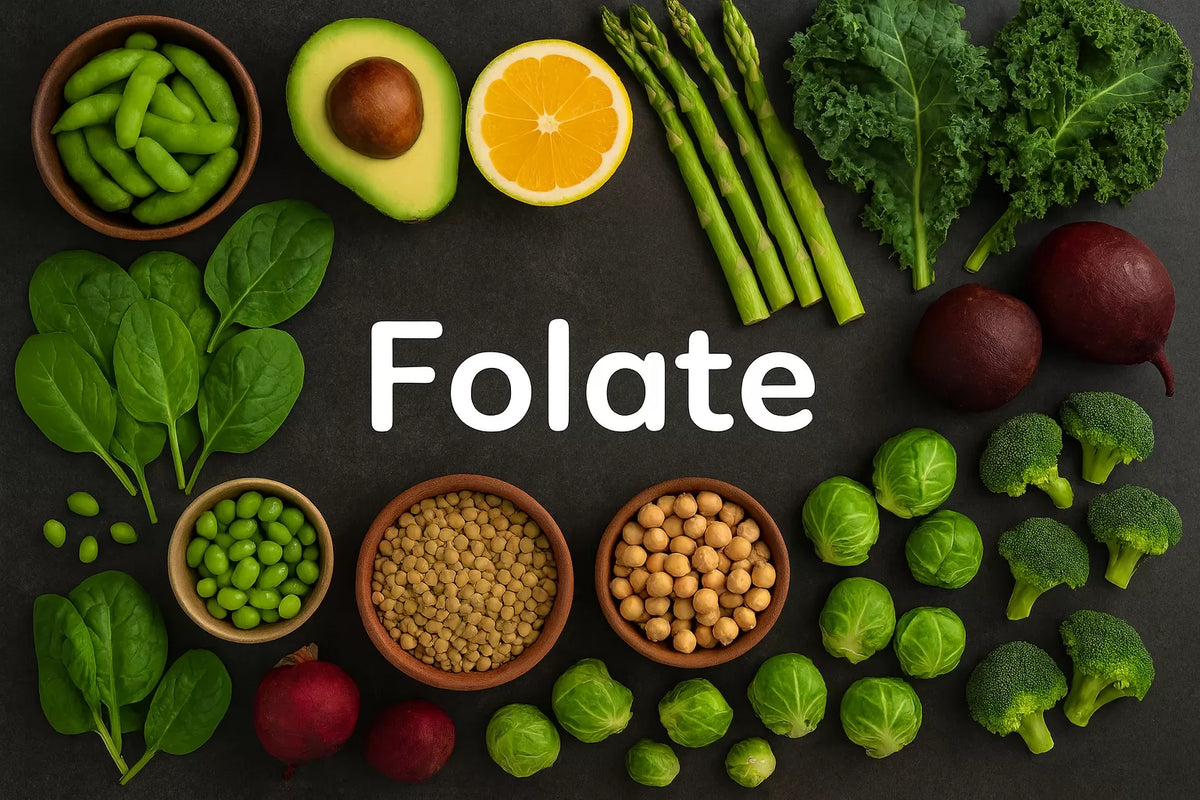
Spinach, kale, asparagus, Brussels sprouts, lentils, black-eyed peas, avocado, citrus, beets and chicken liver are all good natural sources. Spinach, liver, asparagus and Brussels sprouts are among the richest, according to the NIH. For a week of meals built around foods like these, see our guide to the best foods for methylation.
How you cook them matters. A study in the British Journal of Nutrition found boiling kept only 49 percent of the folate in spinach and 44 percent in broccoli, while steaming caused no significant loss. So steam your greens rather than boiling them.

2. Planning a pregnancy? Start early
If you could become pregnant, current US guidance is a daily supplement with 400 to 800 mcg of folic acid, started at least a month before conception and continued through the first two to three months, alongside a folate-rich diet. Ask your clinician which form and dose suit you, especially if you have an MTHFR variant or a report that flags folic acid.
3. Choose a supplement form with your genes in mind
Supplements come in three main forms: folic acid, methylfolate (5-MTHF) and folinic acid. A 2014 review in Xenobiotica, titled "Folate, folic acid and 5-methyltetrahydrofolate are not the same thing," argues that 5-MTHF has advantages for people with MTHFR variants. Your genes can point toward the form that suits you, and your clinician can help you weigh it against your stage of life.
4. Skip the megadoses
More folic acid isn't better. The upper limit for adults is 1,000 mcg a day from supplements and fortified foods, with no limit set for folate from food. Part of the reason is vitamin B12: large amounts of folate can correct the anemia caused by low B12 while the nerve damage from it carries on. The NIH notes that questions about this remain, but it's a good reason to stay near recommended amounts unless your clinician advises more.
5. Support the whole B-vitamin team
Folate works alongside B12, B6, riboflavin and choline. Varied meals with eggs, fish or dairy, leafy greens, beans and whole grains bring in most of them.
6. Go easy on alcohol
Alcohol pulls folate down in several ways. The NIH says it interferes with absorption, speeds up the vitamin's breakdown and increases how much your kidneys flush out.
7. Use your genes as a guide
Your genes help you decide which foods and forms to lean on. They don't diagnose anything, and your clinician and a blood test can show where your folate and homocysteine actually stand today.
Folate and folic acid: quick answers
Is folate the same as folic acid?
Folic acid is one form of folate. Folate is vitamin B9 in general, including the natural forms in food. Folic acid is the synthetic form used in supplements and fortified foods, and your body has to convert it before using it.
Which is better, folate or folic acid supplements?
Neither is better for everyone. Methylfolate skips the conversion step, and the NIH says it's absorbed at least as well as folic acid. Folic acid is the form shown to prevent neural tube defects in pregnancy. Your genes, your stage of life and your clinician's advice decide which suits you.
Should I avoid folic acid if I have an MTHFR variant?
The CDC says common MTHFR variants are not a reason to avoid folic acid, and it recommends 400 mcg a day for anyone who could become pregnant, variant or not. Outside pregnancy, the NIH says some people with C677T might benefit from 5-MTHF instead, though the research is inconclusive. Talk it through with your clinician.
How much folate do I need a day?
The NIH's recommended amount for adults is 400 mcg DFE, rising to 600 during pregnancy and 500 while breastfeeding. DFE stands for dietary folate equivalents, a unit that accounts for folic acid being absorbed more easily than food folate.
See how your genes handle folate
If you want to know how your own genes handle folate and the nutrients around it, the Methylation and Diet Report covers MTHFR and the related genes and ranks the foods and nutrient forms most likely to help you. It reads the raw DNA file you already have from 23andMe, Ancestry, MyHeritage or another DNA service, right in your browser, and your DNA file is never uploaded or stored. You can get a free example report from the report page before you buy.


