
In this post
How Hidden Food Molecules Influence Your Epigenome
Most people can rattle off the basics of nutrition. Protein for muscles. Carbs for energy. Fats for hormones. A short list of vitamins and minerals you are “supposed” to get each day.
But each time you eat a salad, sip green tea, or stir herbs into a soup, your body meets not a dozen nutrients but thousands of distinct molecules. Most never show up on a label. Many are barely cataloged in scientific databases. Some whisper directly to your genes.
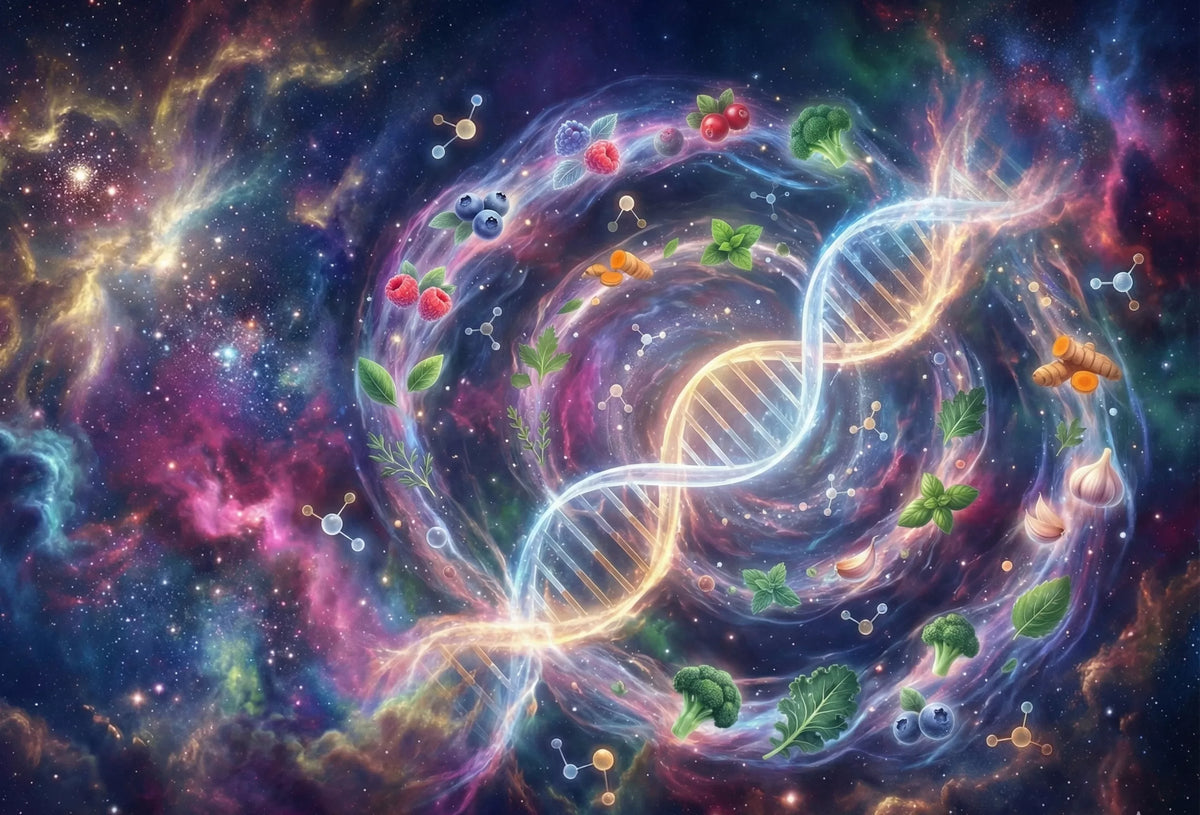
Researchers have started calling this invisible majority nutrition dark matter. It describes the huge collection of food-derived compounds that sit beyond calories, protein, and vitamin C, yet still shape how our cells behave and age, building on work mapping the unmapped chemical complexity of our diet.
If you have ever felt that a colorful home-cooked meal somehow “lands” differently in your body than something ultra processed with the same calories, nutrition dark matter is one big reason why. Your cells are not only counting energy. They are reading messages.
What Is Nutrition Dark Matter?
Nutrition dark matter is a simple phrase for a big idea. It refers to the vast set of bioactive compounds in food that are not counted in traditional nutrient tables.
For most of the last century, nutrition science paid attention to maybe 150 components: amino acids, fatty acids, a modest list of vitamins and minerals, plus energy. That lens was enough to prevent classic deficiency diseases like scurvy and rickets, but it left most of the chemical landscape of food unexplored.
When teams led by physicist Albert-László Barabási began profiling foods with high-resolution mass spectrometry, things got more interesting. Across everyday foods, they identified tens of thousands of distinct small molecules. Newer work on decoding the foodome and the “dark matter” of nutrition suggests there may be well over 100,000 food-derived compounds, with one estimate around 139,000, many of them plant phytochemicals such as polyphenols, terpenes, alkaloids, and sulfur-containing compounds.
Only a small fraction of these show up in standard composition tables. In some databases, garlic alone has thousands of identifiable molecules, yet typical nutrition data captures fewer than 200. So if you only look at calories and vitamins, more than 99 percent of the small molecules in that clove of garlic are invisible.
The term borrows from cosmic dark matter. Astrophysicists know most of the universe is made of something they cannot see directly, but they can tell it is there because it shapes galaxies. In the same way, nutrition dark matter is the hidden chemistry of our diet that rarely appears on labels but likely influences inflammation, detoxification, metabolism, and aging over time.
You do not have to memorize the compounds to care about them. It is enough to know they exist, and that your body is paying attention.
From Nutrient Lists to Molecular Complexity
If you have ever logged your food in an app, you know the standard language: calories, grams of protein, fat, and carbohydrate, plus a few vitamins and minerals. It feels neat and tidy.
The reality inside your plate is not tidy at all.
The foodome is the full chemical landscape of foods. It includes all the “extra” molecules that ride along with macros and micronutrients. When you look at modern composition data, most whole foods contain hundreds to thousands of compounds. In contrast, common nutrient databases track fewer than 200.
So we have been reading only the bolded words in a very long book.
Many of these hidden molecules act like signals, not just fuel. They can:
- Nudge enzymes that process toxins or hormones
- Bind to receptors on cell membranes
- Influence pathways that decide whether cells repair themselves or inflame
This is why two meals can match on calories and macros yet feel completely different in your body. An ultra processed snack may be loud on sugar and refined fat but quiet on the complex phytochemicals that come packaged with whole plants.
One simple shift in perspective helps: move from “food as fuel” to “food as information.”
- Calories are the volume of the music.
- Nutrition dark matter is the melody and rhythm.
You still care how much you eat, but the deeper chemistry of your food changes how your body reads that meal. Once you see it that way, a colorful, plant-heavy dinner and a beige drive-through meal stop feeling interchangeable, even if the numbers on the label look similar.
How Food-Derived Molecules Influence Gene Expression and Methylation
To see how this connects to your biology, we need a short, gentle detour through epigenetics and DNA methylation.
Your DNA is like a library of recipes. Epigenetics is the system that decides which recipes are open on the table and which are tucked away. In more formal terms, epigenetics is the study of how cells control gene activity without changing the DNA sequence, including how genes are turned on and off in response to life and environment.
One of the main tools in that system is DNA methylation. Tiny methyl groups attach to specific spots on your DNA and act like dimmer switches, turning gene activity up or down without changing the underlying sequence.
Enzymes in your cells add and remove these methyl tags. They respond to nutrient status, stress, toxins, aging, and, importantly, to food-derived molecules moving through your bloodstream after a meal. Many compounds inside nutrition dark matter interact with these enzymes or with related proteins called histones, which help package DNA.
If that sounds abstract, concrete examples help:
-
Green tea catechins (EGCG)
EGCG can inhibit a key DNA methyltransferase, DNMT1, in cell models. When DNMT1 is less active, certain silenced genes may become more active again. EGCG also influences histone marks and activates pathways like AMPK and autophagy that are linked to stress resilience and longevity.
-
Curcumin from turmeric
Curcumin has been shown to affect both DNA methyltransferases and histone deacetylases in experimental systems. These shifts change how genes involved in inflammation and detoxification behave, often in a direction that looks protective in models.
-
Resveratrol in grape skins and peanuts
Resveratrol is known to activate sirtuins, a family of enzymes involved in stress resistance, metabolic control, and aging processes. In animal models, it can mimic some aspects of calorie restriction.
-
Sulforaphane from broccoli and other crucifers
Sulforaphane can inhibit certain histone deacetylases and influence methylation patterns, which may relieve epigenetic silencing of protective genes in lab models. It also activates Nrf2, a master regulator of antioxidant and detoxification pathways.
-
Organosulfur compounds from garlic
Molecules like diallyl sulfide and related compounds modulate detoxification enzymes and may shift methylation and gene expression patterns in experimental settings.
You do not have to track exactly which gene each molecule touches. The bigger pattern is what matters: the “extra” chemistry of plants can talk to the epigenome and nudge genes involved in inflammation, stress handling, and repair. Much of this work is early and based on cell and animal studies, so it is better to see it as promising and directional rather than as final proof.
Still, it is hard not to look at a cup of green tea the same way once you know it is doing more than hydrating you.
Plant-Rich Dietary Patterns and Healthy Aging
Of course, you are not drinking pure EGCG or sulforaphane out of a lab bottle. You are eating mixed meals, following patterns, and living a life. So researchers have zoomed out to a more practical question: how do overall eating patterns relate to biological aging?
Large cohort studies that follow people for years have found that plant-rich, minimally processed diets are associated with healthier aging. People who score highest on diet quality indices, with plenty of vegetables, fruits, whole grains, nuts, and healthy fats, tend to have higher odds of reaching older ages with good physical and cognitive function and lower risk of major chronic diseases. In some of these cohorts, higher diet quality is also linked to slower epigenetic age acceleration, which suggests a more favorable trajectory for aging biology.
In some of these studies, scientists have measured epigenetic clocks, which estimate biological age based on DNA methylation patterns. Higher diet quality often lines up with a slower epigenetic pace of aging and younger biological ages than expected for someone’s calendar age.
Mediterranean-style patterns and other polyphenol-rich diets stand out. Japanese men who eat more vegetables, fish, and green tea tend to show lower methylation ages than peers with more Westernized diets. Italian adults with strong adherence to a Mediterranean, plant-forward pattern also show younger epigenetic ages in some analyses.
Intervention trials, while still small, are pointing in the same direction. In the Methylation Diet and Lifestyle trial, middle-aged men followed a plant-forward diet enriched in “methylation adaptogens” like turmeric, green tea, rosemary, garlic, and berries, along with specific lifestyle practices such as exercise, sleep support, and stress management. Over eight weeks, their average DNA methylation age decreased relative to controls, although individual responses varied.
This does not mean that rosemary and a handful of berries will magically rewind your clock. What it does suggest is that patterns and diversity matter. A diet rich in varied plant foods seems to send epigenetic messages that align with better cellular maintenance and slower aging, especially when paired with sleep, movement, and stress management.
If you already gravitate toward colorful, plant-heavy meals, this is science quietly cheering you on.
Polyphenols, Adaptogens and Microbiome Crosstalk
Two groups inside nutrition dark matter get a lot of attention: polyphenols and adaptogens. They both rely heavily on the gut microbiome.
Polyphenols are a large family of plant compounds that often provide color or bitterness. They show up in berries and cherries, cocoa and dark chocolate, coffee and tea, herbs and spices, and many vegetables and fruits. They are not essential in the way vitamin C is, but they behave like gentle stressors and signals, nudging cells to strengthen antioxidant defenses, improve repair, and dampen unnecessary inflammation. Reviews now describe in detail how dietary polyphenols interact with gut microbiota and human health.
Adaptogens are herbs traditionally used to help the body cope with stress. Turmeric, ginseng, Rhodiola, and ashwagandha are common examples. Modern research suggests that some of their key molecules, such as ginsenosides and withanolides, interact with stress response pathways and may influence epigenetic regulators in experimental models.
Here is where the microbiome comes in. Many polyphenols arrive in the colon only partially absorbed. Microbes living there break them down and transform them into new molecules, sometimes with stronger effects than the originals.
Two well-known examples:
- Urolithin A, produced when certain bacteria metabolize ellagitannins from pomegranates and some berries. Early trials link urolithin A to improved mitochondrial function and muscle performance in older adults.
- Equol, produced when specific microbes convert soy isoflavones. Only a fraction of people are “equol producers”, and they often show stronger cholesterol and vascular responses to soy foods than non-producers.
A more recent overview of dietary polyphenols, gut microbiota, and health benefits highlights that polyphenols generally have low direct bioavailability and are extensively transformed by gut microbes into simpler metabolites, with large person-to-person differences.
On top of that, microbes make vitamins like folate and biotin and generate short-chain fatty acids that can act as substrates or signals for epigenetic enzymes.
So you are not just feeding yourself when you eat. You are feeding your microbes. They, in turn, are editing the messages that nutrition dark matter sends to your cells. It is very much a three-way conversation between plants, microbes, and you.
Genes, Epigenetics and Precision Nutrition
If food is information, people do not all read it in the same way. You have probably seen this in real life. One person feels calm and focused after coffee. Another feels wired and anxious. Some thrive on large salads and legumes. Others feel better with smaller amounts and different mixes.
Part of this comes from genetic variation. Small differences in DNA sequence, called SNPs, influence how you process nutrients and signals. Variants in genes such as MTHFR, which helps process folate, can change how efficiently you make methyl groups for DNA methylation. Someone with a less efficient variant may benefit more from folate-rich foods to support normal methylation. Variants in antioxidant enzymes, inflammatory cytokines, and detoxification pathways also change how strongly a person responds to polyphenol-rich diets.
The microbiome adds another layer. Whether you are a urolithin producer, an equol producer, both, or neither depends largely on which bacteria live in your gut. That shapes the downstream chemistry you see after you eat pomegranates, soy, and many other plant foods.
So when we talk about precision nutrition, we are really talking about aligning four things over time, in line with a systems and precision nutrition perspective on food-derived signals and biological aging:
- Your genome
- Your microbiome
- Your epigenome
- Your diet and lifestyle
The science is not at the point where anyone can hand you a perfectly personalized menu and guarantee outcomes. The strongest evidence still supports plant-forward, minimally processed patterns, with adjustments based on your responses, values, and context.
Genetic and microbiome data can add nuance. They can help answer questions like “Should I be extra careful about folate?” or “Might I respond differently to caffeine or certain adaptogens?” But they do not replace common sense or basic healthy eating.
Practical Tips: How to Eat for Nutrition Dark Matter
You do not need to memorize long compound names to benefit from nutrition dark matter. A few simple habits can give you a richer, more supportive “chemical conversation” with your food.
Think of these as gentle dials you can turn, not strict rules.
1. Prioritize diverse plant foods
Use plants as the backbone of most meals. Vegetables, fruits, legumes, whole grains, nuts, and seeds each bring a different mix of phytochemicals. Rotating leafy greens, cruciferous vegetables, alliums like onions and garlic, and colorful fruits increases the variety of signals your body receives over the week.
If your grocery basket looks like the same three vegetables every time, this is an easy place to play. Swap in something new once in a while and see how you feel.
2. Rotate colors, plant families, and textures
A quick visual check is surprisingly helpful. If everything on the plate is beige, something is missing. Aim for different colors across the day and mix raw and cooked preparations. Crunchy salads, roasted roots, sautéed greens, and fresh herbs all carry different phytochemical patterns. Purple, orange, deep green, and red often hint at distinct plant compounds.
This is not about making every meal Instagram-worthy. It is about giving your body a broader vocabulary of food signals.
3. Use herbs and spices generously
Herbs and spices are small but mighty sources of nutrition dark matter.
- Garlic and onions add organosulfur compounds.
- Turmeric brings curcuminoids.
- Rosemary, oregano, and thyme offer polyphenols like rosmarinic acid.
- Ginger provides its own pungent gingerols.
If you already cook, one of the simplest upgrades is to be more generous with herbs and spices. If you do not cook much, even adding a jar of good pesto or sprinkling dried herbs onto a pre-made meal is a step in the right direction.
4. Choose minimally processed foods when you can
Ultra processed foods tend to remove complex plant chemistry and add back refined starches, fats, and flavorings. Whole and minimally processed choices keep more of the original polyphenol profile, fiber matrix, and co-factors. Two snacks can have similar calories and macros but very different effects on satiety, inflammation, and epigenetic signaling once you look below the surface.
This does not have to be all or nothing. Swapping one snack or one meal a day toward something closer to its original plant form already shifts the chemistry you are sending to your cells.
5. Support your microbiome
Because microbes co-write the script of nutrition dark matter, it pays to keep them well fed. For most people that means:
- A mix of fibers and prebiotic-rich foods such as legumes, oats, onions, garlic, leeks, and bananas
- Some fermented foods, if tolerated, like yogurt, kefir, kimchi, or sauerkraut
- Less reliance on ultra-processed, low-fiber products as everyday staples
You do not have to become “perfect” here. Small, steady improvements in fiber and plant diversity tend to support a more diverse and resilient microbiome, which in turn broadens the chemistry your body sees after meals.
6. Be curious and cautious with adaptogens
Adaptogenic herbs like ashwagandha, ginseng, and Rhodiola are concentrated sources of bioactive compounds. For some people they are useful tools. For others they may not fit well, especially alongside certain medications or health conditions.
If you explore adaptogens, it is wise to:
- Start low and go slowly
- Pay attention to how you feel, physically and mentally
- Involve a qualified practitioner if you have underlying medical issues or take prescription drugs
7. Treat this as education, not a prescription
These are general patterns, not a personalized treatment plan. Your age, medications, diagnoses, and personal history all matter. Think of these ideas as raw material for conversation with your health care team, not as a set of rules you must follow exactly.
You are allowed to experiment, notice, and adjust.
Where Noorns Fits In: DNA, Methylation and Nutrition Dark Matter
At Noorns, nutrition dark matter is part of the backdrop we keep in mind when we look at your genetics. We care about how genes involved in methylation, stress response, detoxification, and energy metabolism may shape your response to plant-rich diets, polyphenols, and other food-derived signals that touch the epigenome.
Our DNA-based nutrition reports look at pathways rather than single “good” or “bad” genes. For example, if a variant suggests your methylation system may run closer to its edge, that can highlight the importance of folate-rich foods and B vitamins within the broader pattern of diverse plants and minimal ultra processing. If stress response genes point to particular sensitivities, that can inform how you think about caffeine, sleep, and perhaps your relationship with things like green tea or adaptogens.
A few things guide the way we do this:
- Privacy first: Your DNA data is analyzed locally on your device, not uploaded to our servers, which protects both your information and your sense of psychological safety.
- Evidence-minded: We follow the emerging science on epigenetics, nutrition dark matter, and biological aging, and we are honest about which areas are solid and which are still early.
- Pathway-focused: We emphasize methylation, stress, and longevity-related pathways where nutrition can make a meaningful difference over time.
If you are curious about how your own DNA interacts with diet, methylation, and nutrition dark matter, our reports are meant to be a calm, practical companion rather than a verdict. They can help you decide where to focus your attention without turning eating into a puzzle you have to solve perfectly.
The Future of Nutrition Dark Matter and Personalized Nutrition
Behind the scenes, researchers are racing to chart this hidden layer of food. Teams are cataloguing thousands of compounds in everyday ingredients and linking these maps with epigenetic clocks, microbiome profiles, and long-term outcomes. Recent work on food-derived signals and biological aging in a systems and precision nutrition framework is framing diet not only as fuel, but as a coordinated set of molecular cues that interact with our genes and epigenome over time.
The long-term vision is easy to get curious about. Imagine food described not just in calories and grams, but in richer patterns of plant chemistry. Imagine having a clearer picture of how your genome and microbiome handle those signals, so nutrition advice feels less generic and more like a gentle, personalized steering system.
We are not there yet, and that is fine. You do not need perfect data to make meaningful changes. The evidence we already have points to a few sturdy anchors: eat a variety of plants, favor minimally processed foods, pay attention to how you feel and function, and think in terms of healthspan rather than quick fixes.
Nutrition dark matter adds a layer of quiet wonder to everyday choices. Food is not only fuel. It is a steady stream of biochemical sentences your body reads over decades. When you keep that in mind, swapping in berries for candy or herbs for another spoon of sugar becomes less about rules and more about having a better long-term conversation with your future self.
If at some point you want help weaving your genetics into that conversation, Noorns is here with privacy-first, on-device DNA nutrition reports that focus on methylation, stress resilience, and healthy aging pathways.


