
In this post
Choline Deserves More Attention
Choline doesn’t get the spotlight like omega-3s or vitamin D. Yet it’s essential for memory, focus, metabolism, and long-term health. Research suggests that many people may not be getting enough, according to the National Institutes of Health. Women, vegetarians, and older adults are especially likely to fall short.
Unlike some nutrients, your body can’t make enough choline on its own. That means you depend heavily on diet to meet your needs. Falling short can quietly affect brain function, liver health, and methylation. That is the process that helps regulate how your genes are read.
Choline acts a bit like a multitasker in the body: it helps build healthy cell membranes, supports brain function, and plays a big role in how your body handles methylation (the process that keeps your DNA, energy, and detox systems running smoothly).
Here’s where genes like MTHFD1, BHMT, and PEMT come in. These genes all rely on choline as a cofactor to do their jobs. If you happen to have variants in one or more of them, your body’s demand for choline can be higher than average. In other words, while the general population might get by on the standard daily recommendation, your “personal RDA” could be much higher. Without enough choline, you might feel more fatigue, have trouble with focus, or even notice issues with liver function or hormone balance over time.
What Choline Actually Does in the Body
Think of choline as a multi-tool nutrient:
- Brain function: It’s a precursor for acetylcholine, a neurotransmitter critical for memory and learning. Low intake has been linked to poorer cognitive performance.
- Liver health: Choline helps shuttle fat out of the liver. Without enough, fat can accumulate, contributing to nonalcoholic fatty liver disease according to Harvard T.H. Chan School of Public Health.
- Methylation: Choline donates methyl groups. These are tiny chemical tags that help regulate gene activity. This connects it directly to DNA methylation, which affects processes from detoxification to mood regulation, explains the National Library of Medicine.
- Cell Membrane: Phosphatidylcholine is one of the most important building blocks of your cell membranes. Every single cell in your body is wrapped in a protective layer called the phospholipid bilayer, and phosphatidylcholine makes up a big part of that structure. Think of it as the “brick and mortar” that keeps your cells strong, flexible, and able to communicate with each other. Without enough phosphatidylcholine, those cell membranes can become less stable, which can affect everything from how your cells take in nutrients to how they signal to the rest of your body.
Each role is distinct, but together they show why steady choline intake matters for both daily function and long-term health.
Why So Many People Miss the Mark
Despite its importance, choline has been called a “nutrient of concern” because most adults don’t reach the recommended intake. In the U.S., only about 10% of people meet the Adequate Intake levels set by the Institute of Medicine. And that’s for the general population, not to mention those with gene variants who’s personal RDA is much greater than the recommended 400-500 mg, for women and men, respectively.
Part of the problem is awareness. Choline wasn’t even recognized as an essential nutrient until 1998. Unlike vitamin C or calcium, it’s rarely emphasized in public health campaigns, and food labels don’t usually list it. That makes it easy to overlook.
Diet also plays a role. The richest sources are animal-based, such as eggs, liver, and salmon, so vegetarians and vegans are at higher risk of deficiency. Postmenopausal women are also more vulnerable because estrogen normally boosts the body’s ability to make choline.
Brain Benefits: Memory and Learning
Acetylcholine, made from choline, is sometimes called the “learning neurotransmitter.” Research shows that higher maternal choline intake during pregnancy supports fetal brain development and may have lasting effects on memory and cognition in children, according to a study published in The FASEB Journal.
In adults, low choline intake has been linked to memory difficulties and cognitive decline. While research is ongoing, maintaining steady choline intake appears to support healthy brain aging, especially in combination with other B vitamins.
Liver Health: Keeping Fat in Check
Your liver depends on choline to package and export fat. Without enough, fat can build up, leading to nonalcoholic fatty liver disease (NAFLD). The National Institute of Diabetes and Digestive and Kidney Diseases notes that NAFLD now affects up to 25% of adults worldwide.
Clinical trials have shown that choline deficiency can trigger fatty liver even in otherwise healthy people. That makes diet a simple but powerful lever for protecting liver health.
Choline and Methylation
Methylation is like a dimmer switch for gene activity. Choline supplies methyl groups, working alongside folate and vitamin B12 in the “one-carbon metabolism” cycle, the same loop behind SAMe and methylation. When choline intake is low, methylation falters, which can affect detoxification, mood chemistry, and homocysteine levels. Homocysteine is a marker tied to cardiovascular health.
Some people have genetic variants, such as MTHFR polymorphisms, that make them less efficient at processing folate. These individuals may rely more heavily on choline to keep methylation balanced, according to a review in Nutrients.
Food Sources of Choline
Building a reliable choline supply is simpler than it sounds:
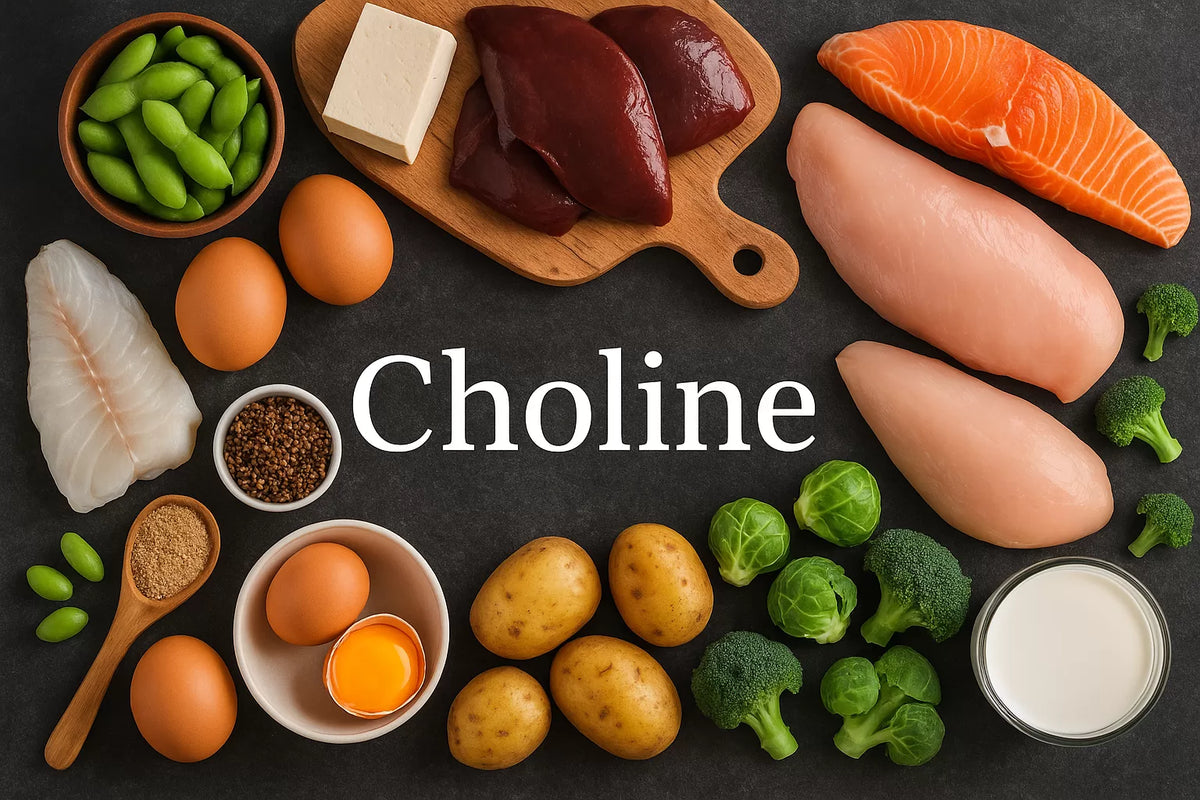
- Eggs: One large egg contains about 150 mg. That is nearly 30% of daily needs for many adults.
- Meats and fish: Beef liver is the richest source; salmon, chicken, and turkey are also good.
- Plant sources: Soybeans, Brussels sprouts, broccoli, and quinoa contribute smaller amounts, helpful especially in plant-based diets.
The U.S. Department of Agriculture provides detailed choline content for foods if you want to check what’s on your plate.
Who’s Most at Risk of Deficiency
- Pregnant and breastfeeding women: Needs rise dramatically, yet many prenatal vitamins still don’t include choline.
- Postmenopausal women: Estrogen normally helps the body make choline; after menopause, this support fades.
- Vegetarians and vegans: With few plant sources, hitting targets requires extra planning.
- People with genetic variants: Certain SNPs in folate or choline pathways increase dietary needs.
Recognizing where you fall in these groups can help you be proactive.
Practical First Steps
You don’t need to overhaul your diet overnight. Instead:
- Build one reliable choline anchor into your week, like eggs for breakfast or salmon at dinner.
- Fill the gaps with smaller sources like broccoli, quinoa, or soy.
- If you’re pregnant, breastfeeding, or postmenopausal, ask your clinician about your intake.
These small, steady moves are what make the difference.
The Genetic Angle
Your DNA can influence how much choline you need. Variants in genes like PEMT (which helps your body make choline) can increase dietary requirements. That’s why two people eating the same foods may end up with very different methylation balance.
Noorns’ Methylation & Diet report highlights these nuances, showing how folate, B12, choline, and betaine interact in your genetic blueprint. Because our reports run directly on your device, your raw DNA never leaves your computer. Your most sensitive data stays under your control.


